VisionPeak

An AI-powered web builder that starts where great design begins “with moodboards” ensuring every generated interface is aligned, high-fidelity, and ready to ship.

AI builders are fast, but they skip the most critical part of design. They leap from vague prompts to rigid layouts, producing generic looking results. VisionPeak flips the process, starting with a collaborative moodboard.

When VisionPeak was brought to me, it came wrapped in frustration. The founder was tired of relying on developers and designers to fix AI-generated outputs that lacked design depth, doubling dev time and draining budgets with wasted credits. Hence the journey of creating a moodboard-first, alignment-driven workflow that produces near-final interfaces from the start, cutting rework and delivering production-ready results faster began.

Role

User Experience
Visual Design
Prototyping
User Testing

Client

VisionPeak

Duration

3 months

Year

2025
1/5

Insights & Problems

AI skips the alignment stage

Most AI site builders leap from a vague prompt straight to layouts, skipping style refinement and alignment. The result? Misaligned, generic designs that need heavy rework.

Creative control comes too late

Users can’t meaningfully guide AI before generation. That means more failed attempts, wasted credits, and slower launches.

Inspiration is scattered

Style references live in screenshots, dribbble saves, and design systems, but there’s no central, editable space to bring them together before building.

All-or-nothing regeneration

Change a single section? Most tools force you to rebuild the whole layout, causing a significant number of credit to be wasted and can cause edits on unintended parts.
2/5

User Persona

About

Daniel is a solo founder racing to build an MVP for his YC pitch. With no budget for a full team, Daniel turns to AI builders, but generic outputs force costly rework with freelancers, doubling dev time and draining credits. He needs a tool that captures his vision from the start and delivers pitch-ready results fast.

Goals

  • Build and ship a convincing MVP in weeks, not months
  • Translate multiple product ideas into tangible, testable interfaces
  • Impress investors with a polished, cohesive product vision without hiring a full team

Behaviours

  • Works late nights iterating on ideas
  • Consumes product teardown videos and YC success stories
  • Shares prototypes with a small network for quick feedback

Frustrations

  • Existing AI tools produce visually bland, misaligned outputs that still require a designer to fix
  • Wasting AI credits and time on endless prompt iterations
  • Can’t afford the time or cost of full-stack teams before fundraising

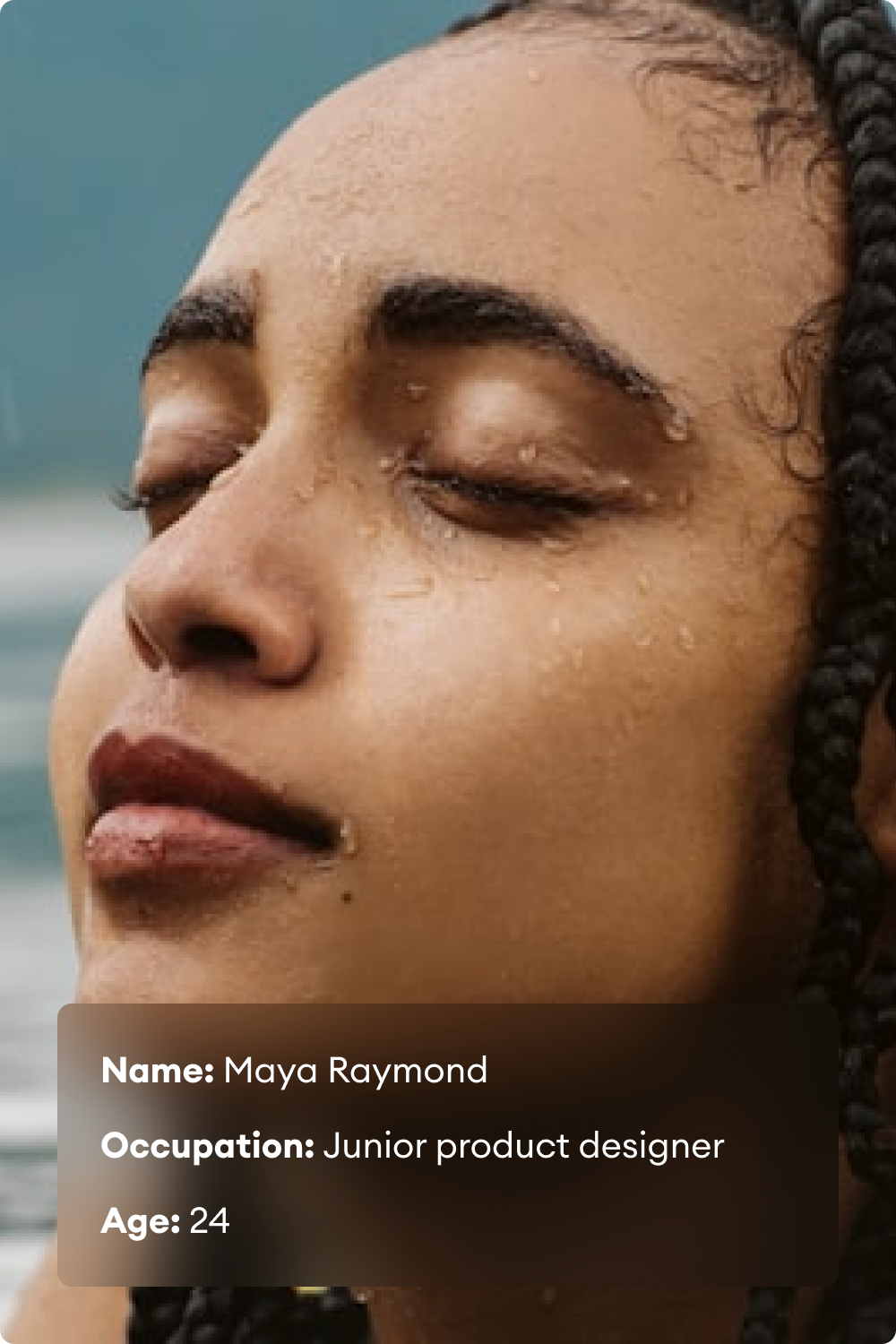
About

A 24-year-old junior product designer eager to stand out. Her workflow is slow and scattered, and AI templates feel generic. Maya wants a faster way to explore styles, refine direction, and produce functional designs that reflect her own creative voice.

Goals

  • Build a diverse, impressive portfolio to land a senior design role
  • Explore new visual styles quickly without hunting through dozens of sites for inspiration
  • Practice translating abstract ideas into functional, high-fidelity interfaces

Behaviours

  • Experiments with side projects in evenings
  • Follows design leaders on Twitter/X and participates in design challenges
  • Iterates heavily on details to showcase craftsmanship

Frustrations

  • Collecting inspiration is slow, scattered, and hard to align into a single vision
  • Feels limited by templates that force her into generic layouts
  • Needs real-world, polished projects, not just Dribbble shots — to stand out
3/5

How Might We

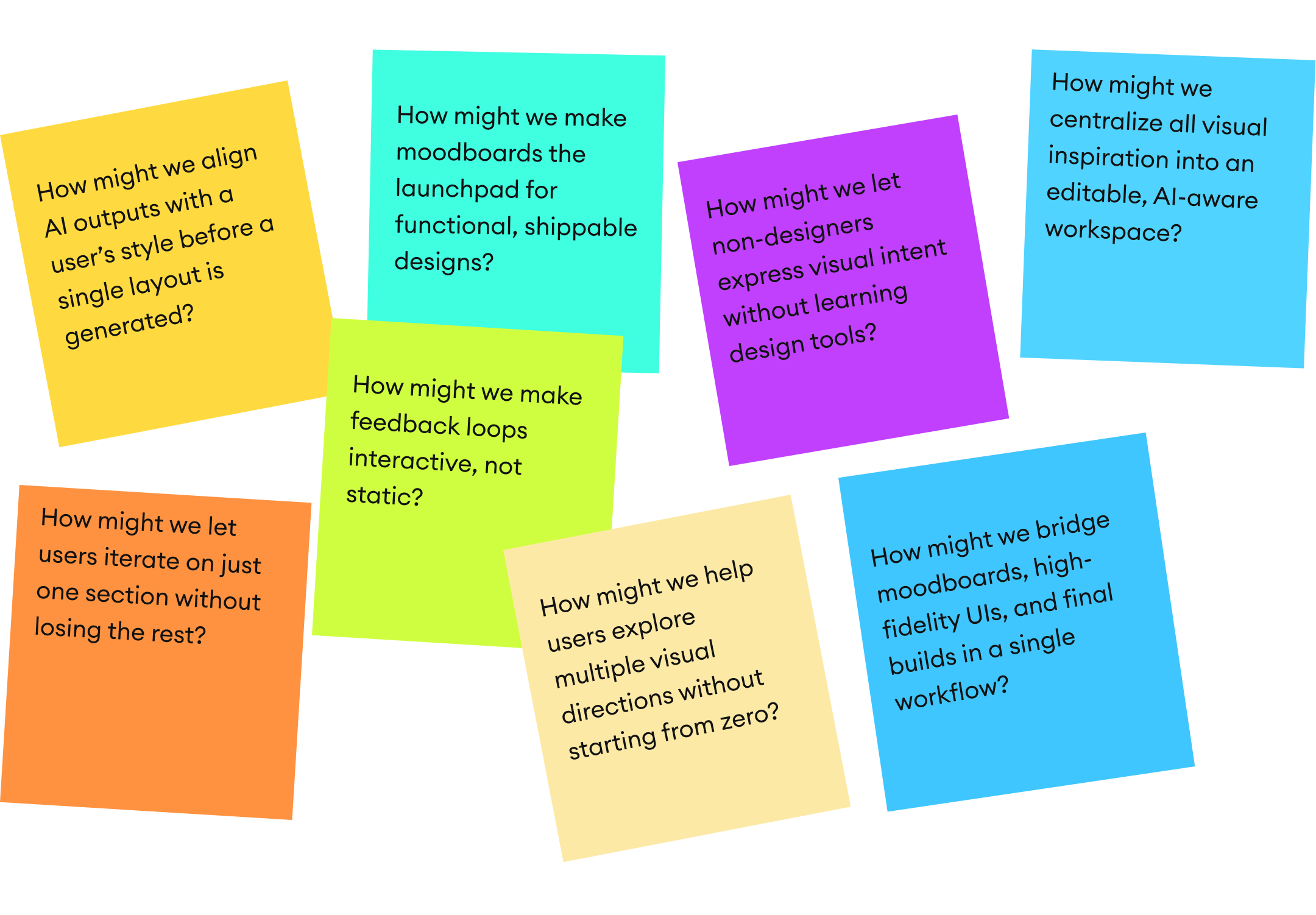
In this phase all the ideas from research, to the CEO, PM, CTO and the marketing team are brought to the table in an in-house brainstorming session to get the best ideas out through some How Might We questions
4/5

Design in Action

We knew from the start that VisionPeak wasn’t just another AI site builder, it had to feel like a creative partner that understood your style before writing a single line of code. Every project needed to start with alignment, not guesswork, so we designed the journey to guide users from their very first prompt into a fully aligned, production-ready interface.

Moodboard-to-Spec Workflow

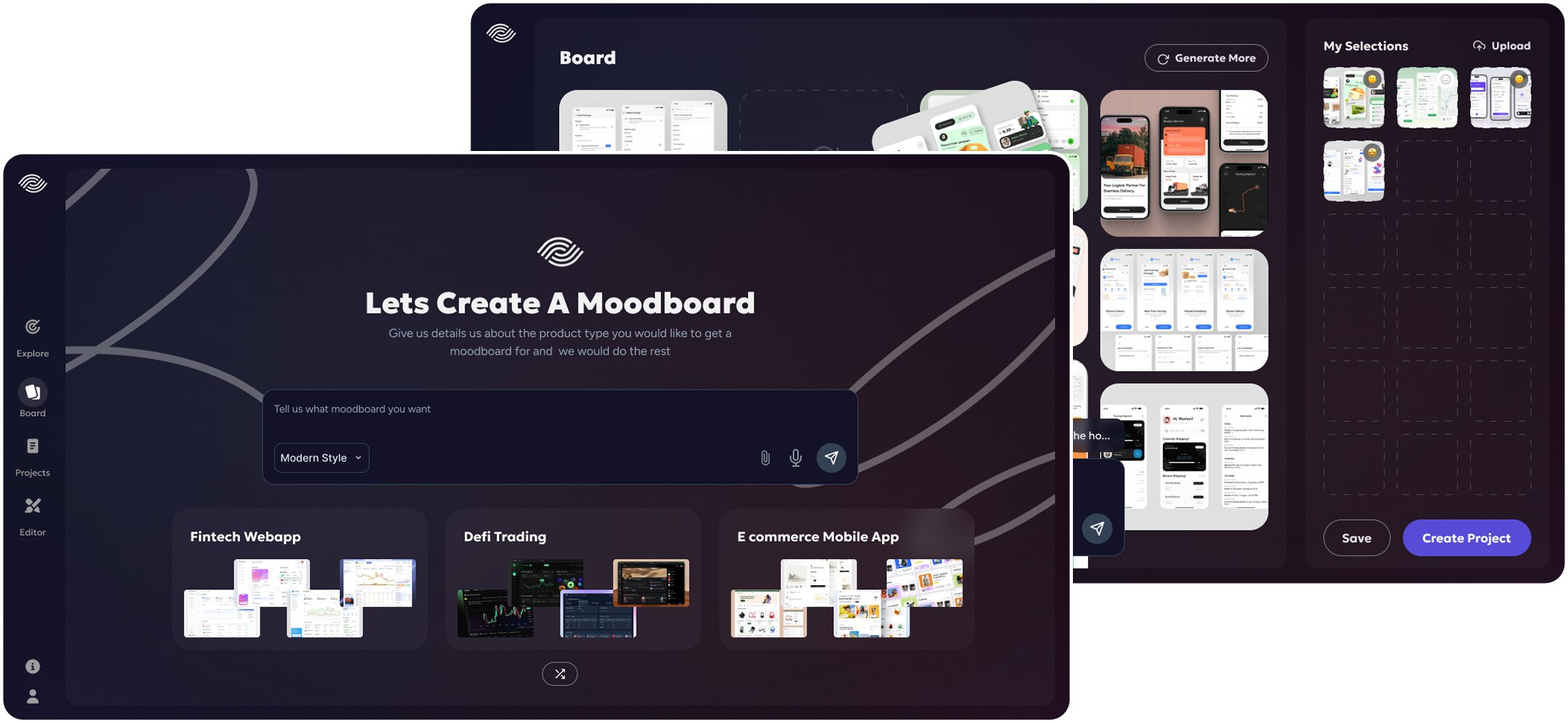
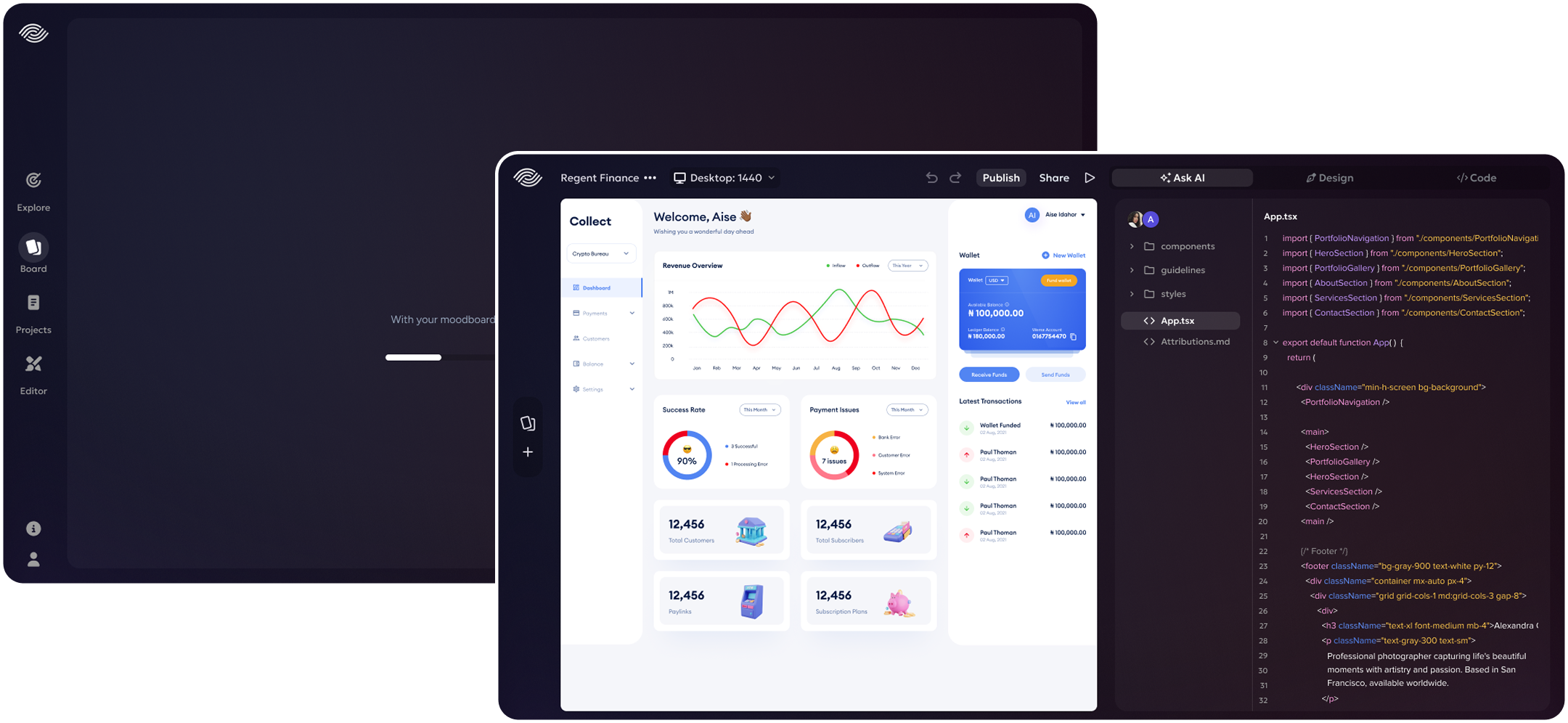
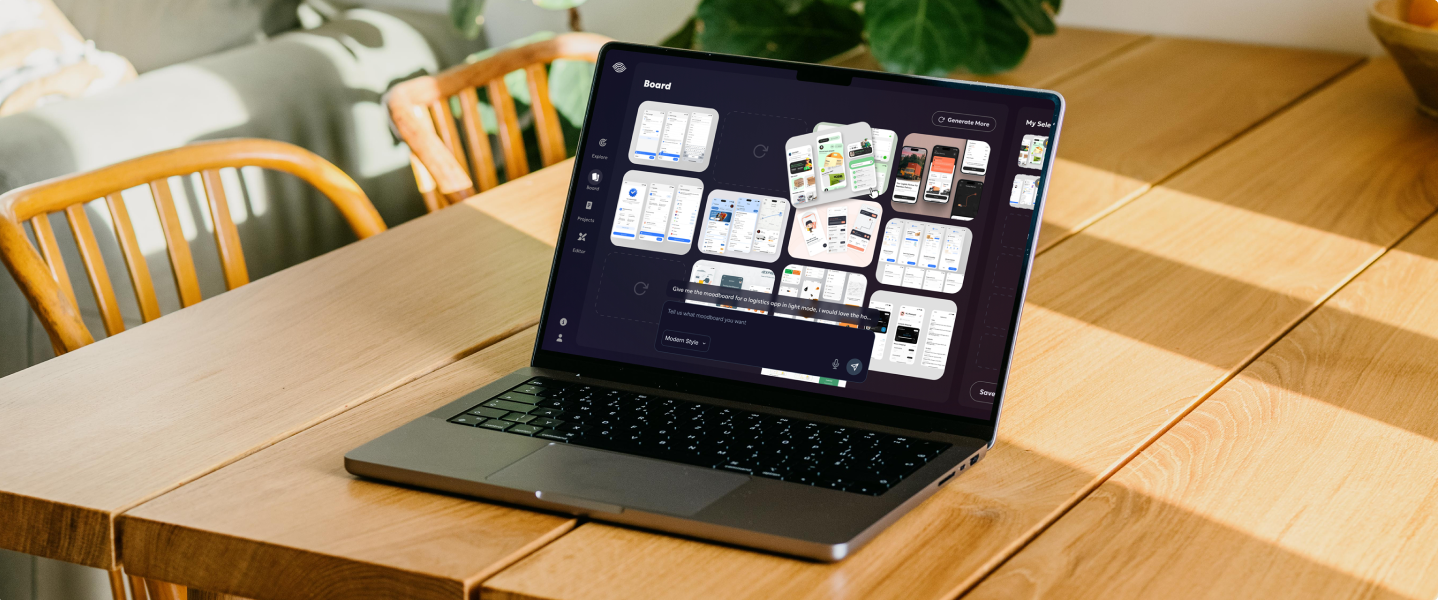
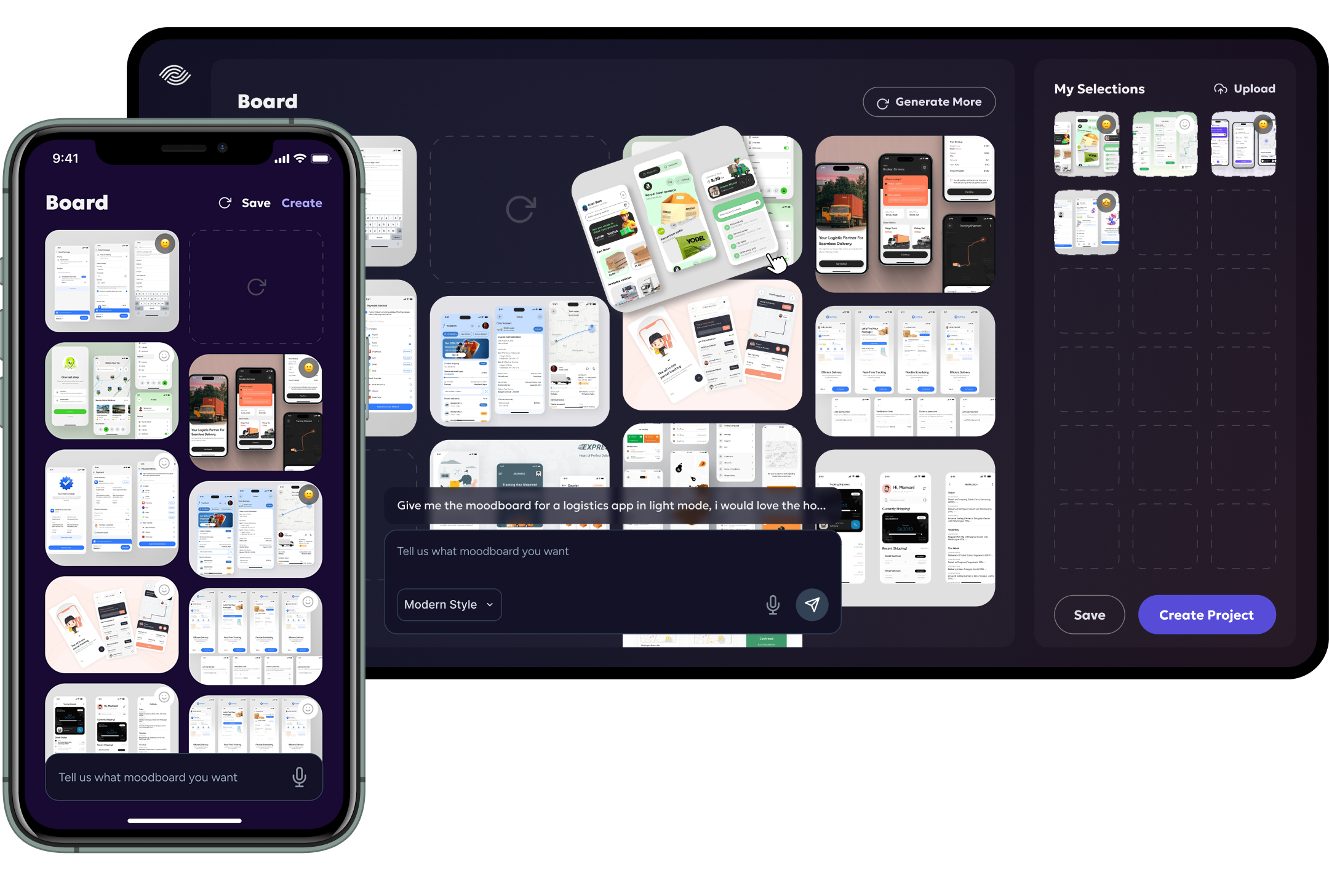
From a simple prompt like “minimalist dashboard for a healthcare startup”, VisionPeak instantly curates a themed moodboard layouts, components, fonts, and color palettes, organized by style and use case. Users can explore stylistic variations (dark mode, brutalism, minimalism) and assemble a “Frankenstein” canvas by identifying the best elements into a cohesive visual spec.
Highlight & Influence

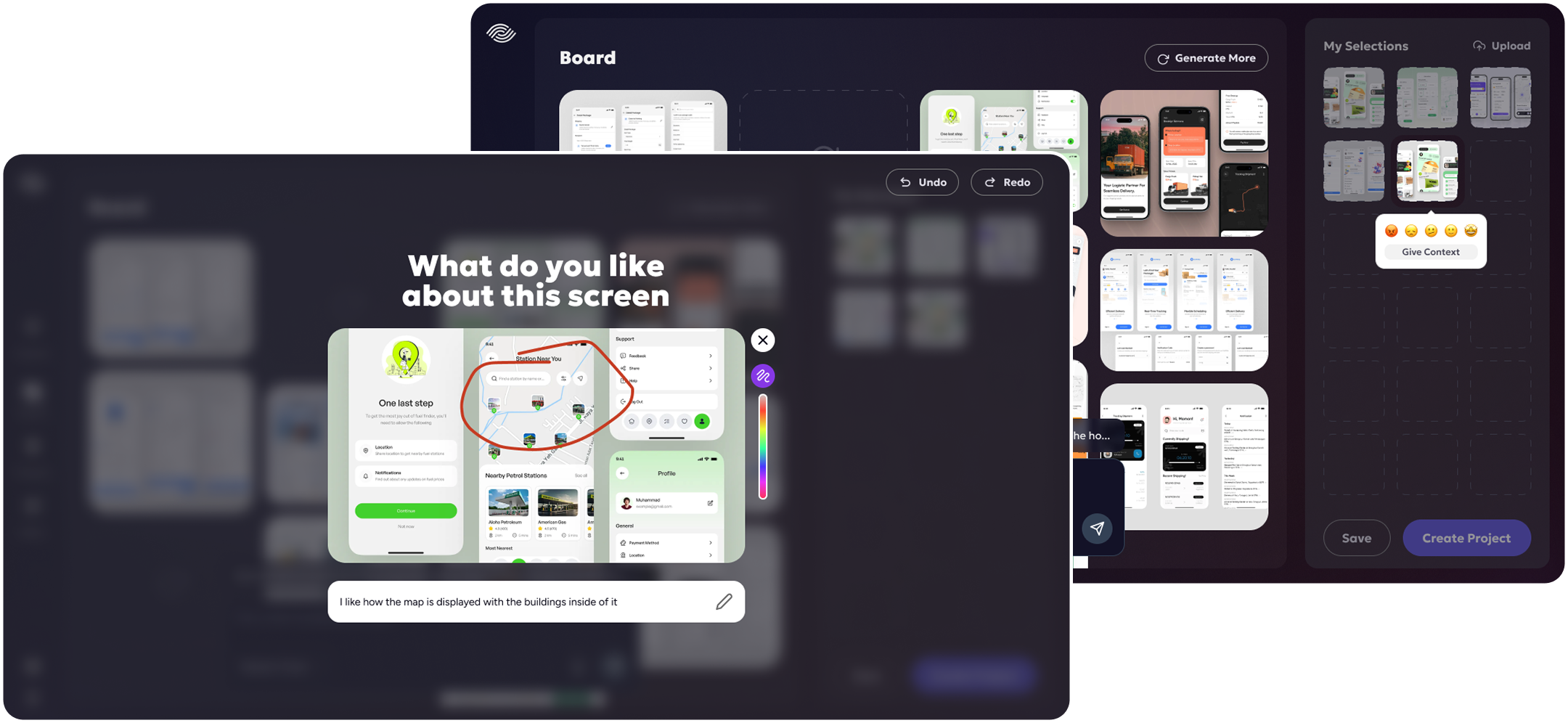
Users can select specific parts of any design, a header, a font, a color scheme and rate how much they like it. VisionPeak uses these ratings and highlights to learn the user’s tastes, influencing future moodboards and final designs so each generation feels more personal and aligned.

From Spec to Editable UI

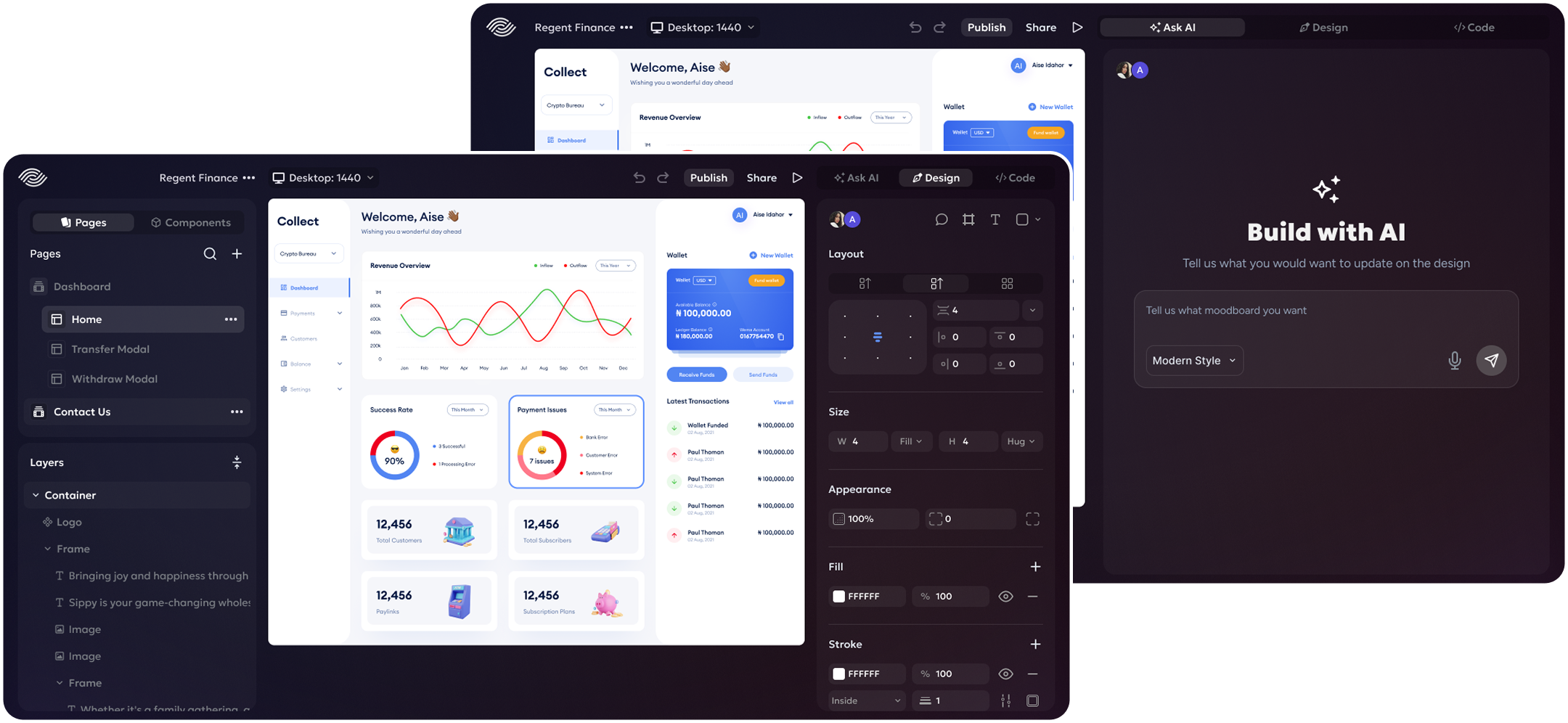
Once the visual spec is ready, the AI generates a complete interface that reflects the curated moodboard, not just the prompt, resulting in a first draft much closer to the final product. With a lightweight, Figma-like editor, users can tweak sections, regenerate only what needs changing, and save multiple design versions for side-by-side comparison.

Figma-to-Code Integration

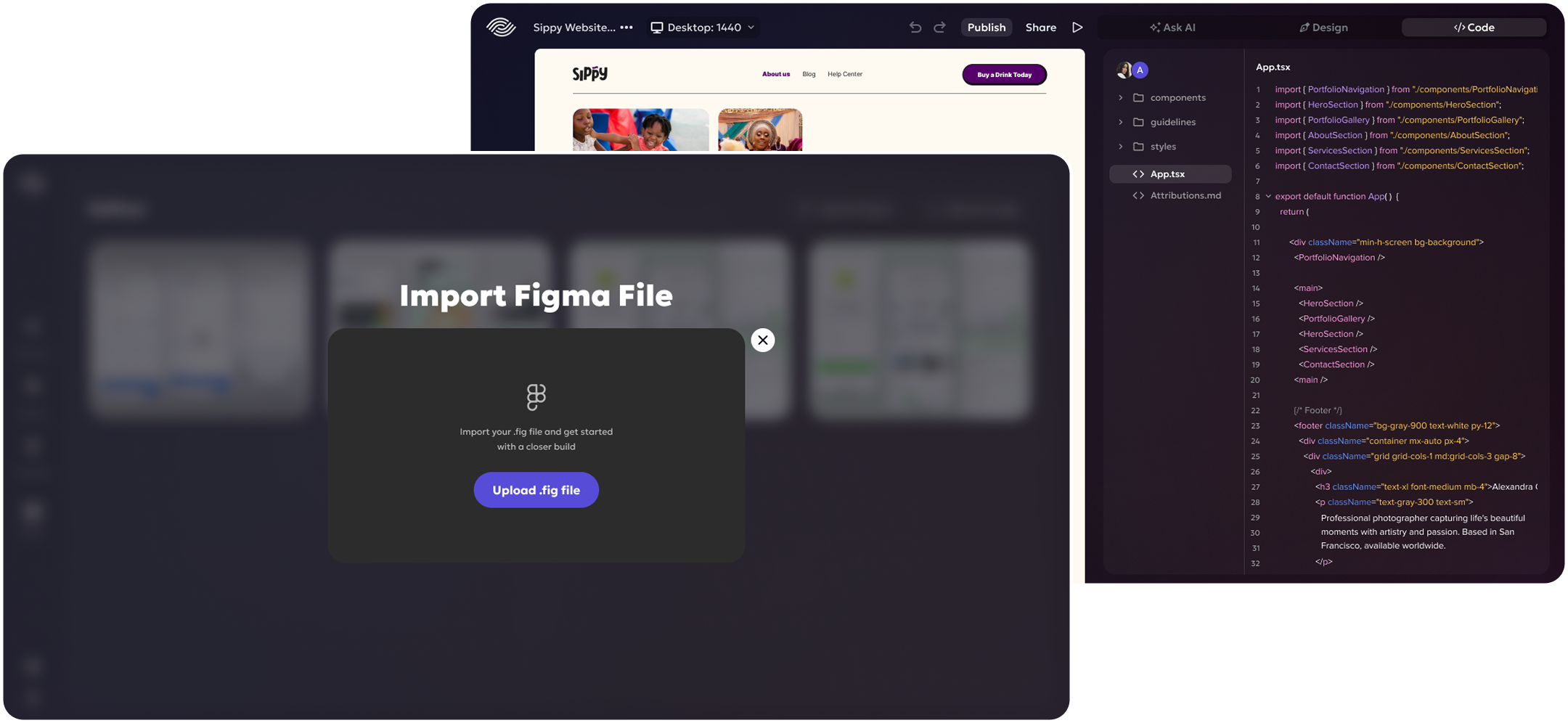
Designers can upload their Figma files directly into VisionPeak, which converts the design into a clean, code-exportable format. From there, they can tweak the build using the design tool or AI-assisted edits, making the jump from concept to live, production-ready product faster and easier than ever.
5/5

Learnings & Impact

Clarity before complexity wins

Working on VisionPeak reinforced that the earliest design decisions, style alignment, tone, and visual direction, have the biggest downstream effect. By placing these up front, I saw firsthand how it reduced user frustration and technical rework.

Designing for both novices and experts

I had to balance the needs of non-designers, who needed guidance and guardrails, with professional designers, who wanted flexibility and control. This required carefully designing features that could scale in complexity without overwhelming first-time users.

AI isn’t a magic button

This project deepened my understanding of how to design AI-assisted experiences. It’s not about replacing creativity, but giving users tools to shape AI’s output in ways that feel intentional and personal.

Other Works

Hit me up let's create something, fun, magical, a
digital solutions that would truly relate to the users and take
the business to the next level

LETS TALK - LETS BUILD LETS TALK - LETS BUILD LETS TALK - LETS BUILD