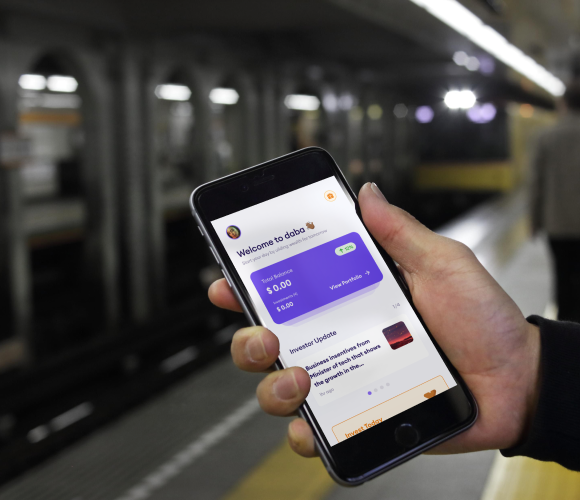
Powr Finance: Scaling Global Fintech for the African Market

Designing a unified financial gateway for seamless intercontinental transactions and crypto settlements.

Powr Finance is an all-in-one fintech solution bridging the gap between African businesses and the global economy. By providing frictionless cross-border payments without the barriers of currency conversion or high bank fees.

In a market where high fees and conversion hurdles stifle growth, Powr Finance provides a strategic bridge for businesses to scale globally. I led the evolution of the platform from a conceptual framework into a robust financial tool. By focusing on "spending-first" utility, I crafted an ecosystem that enables multi-currency management, virtual cards, and crypto settlements, all while maintaining regulatory transparency.

Role

Product Designer

Client

Powr Finance

Duration

2 months

Year

2020
Quick Read
Full Case Study

The Global Payment Gap

Every great product is built on solving a hidden pain point. For Powr Finance, the problem was clear: African service providers were extending their reach globally, but their financial tools were anchored in the past. Receiving foreign payments meant navigating a maze of high conversion fees and restrictive bank policies.
  • The Problem: Freelancers and SMEs struggle with "outrageous" bank charges and bureaucratic hurdles just to receive foreign earnings.te clarity on fund security and approval states; any ambiguity leads to churn.
  • The Trust Constraint: Because of high transaction failure rates in the region, the UI had to over-communicate security and real-time status to prevent user anxiety.
  • The Liquidity Barrier: Users needed instant access to funds, requiring a seamless bridge between global fiat currencies and local crypto/fiat settlements.

Design Execution: Architecting a Global Financial Hub

Intentional design systems built to bridge the gap between traditional banking friction and the fluid speed of Web3 and digital commerce.

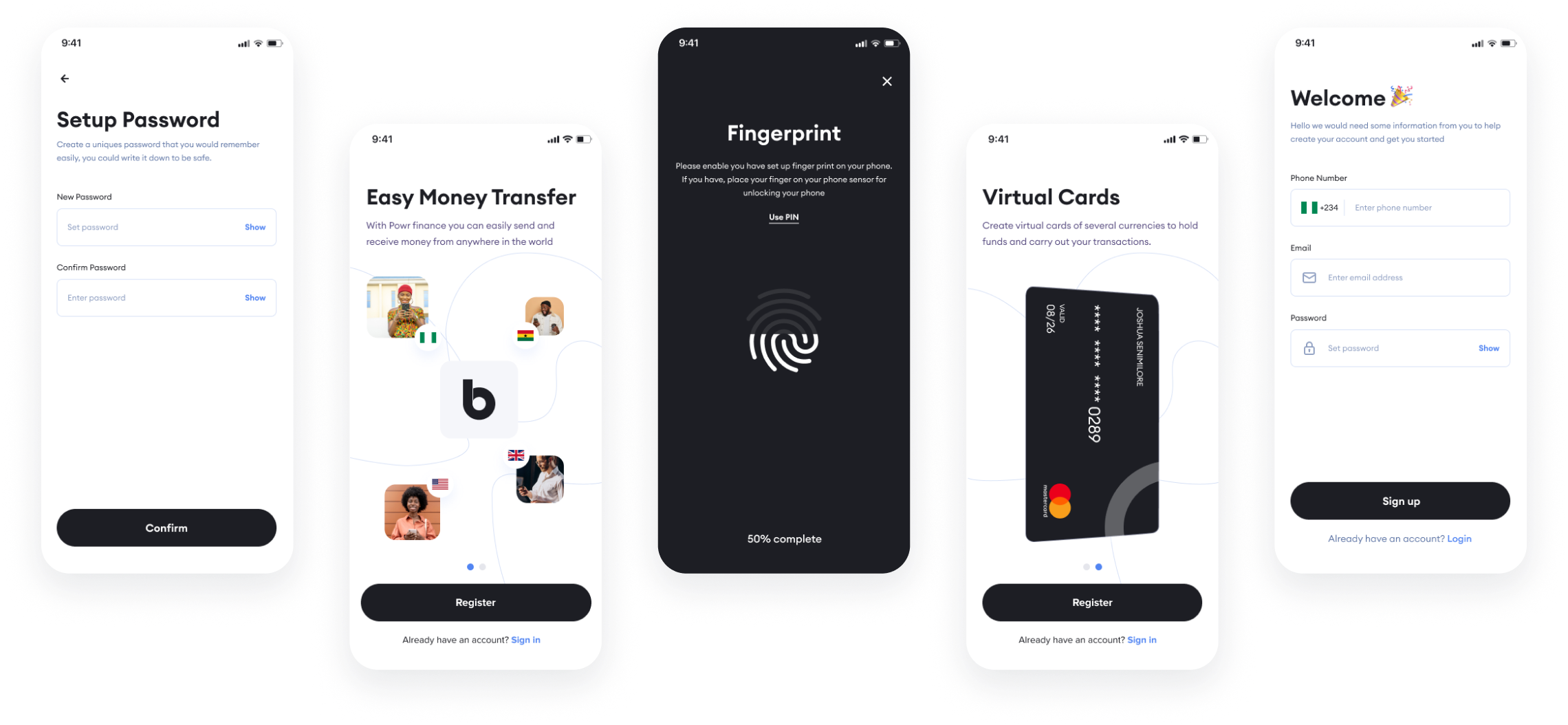
Simplified Onboarding: Reducing the "Barrier to Entry"

The Problem: High-stakes fintech often loses users at the front door due to complex KYC and daunting security setups.

The "How": I designed a progressive onboarding flow that prioritizes immediate value. Users can explore the interface and open a local account with limited transaction limits before being prompted for full KYC.

My Simplified Approach: By treating security as a gradient rather than a wall, we reduced initial drop-off while maintaining full regulatory compliance.

Inclusive Finance: Conversational Banking for Low-Connectivity

The Problem: Many users operate in areas with unstable internet or have limited data, making heavy fintech apps difficult to use consistently.

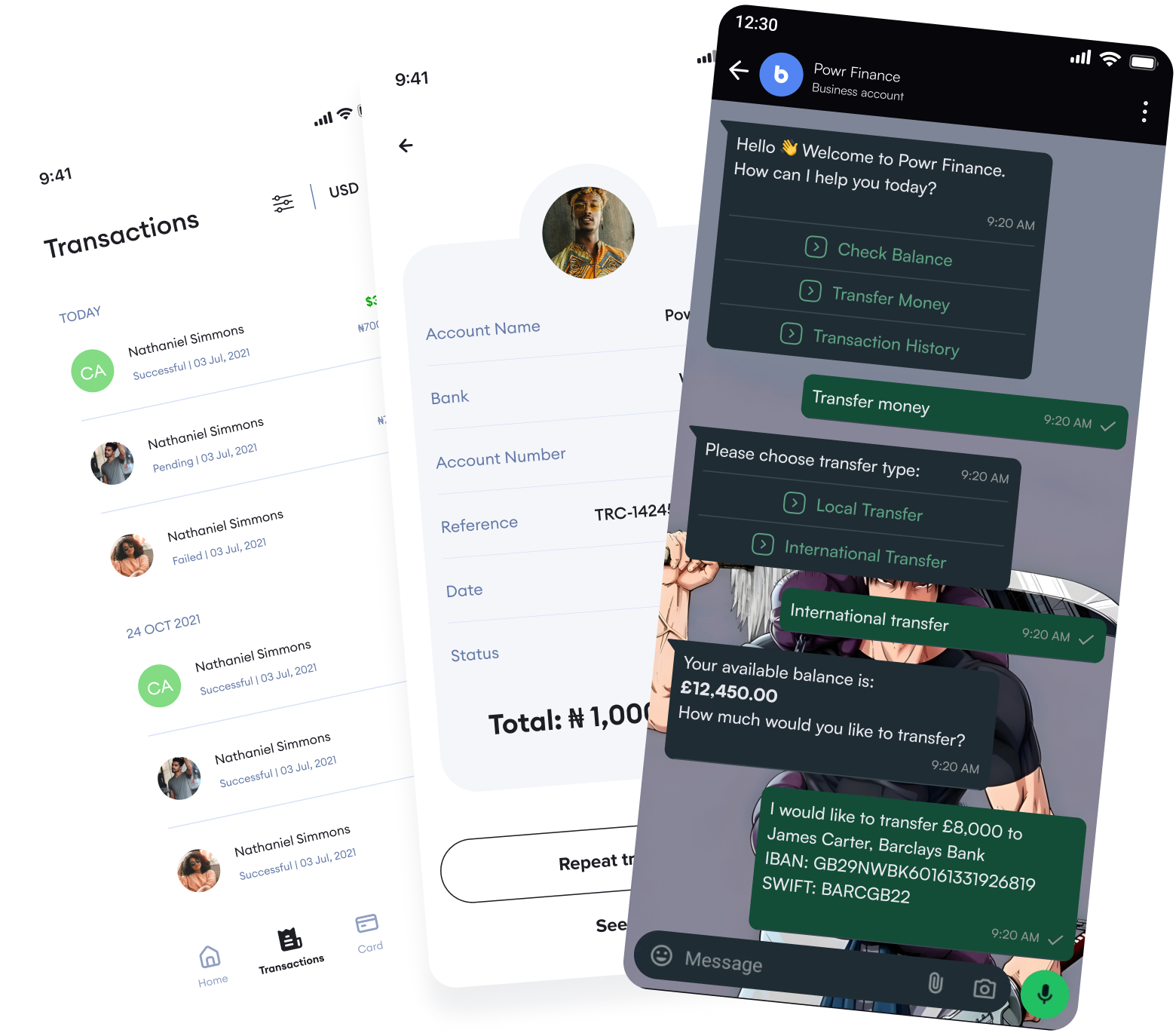
The "How": I designed a conversational banking interface via WhatsApp, allowing users to execute transfers, check balances, and fund accounts through a familiar, text-based agent.

My Simplified Approach: By abstracting the complex UI into a low-bandwidth chat environment, I ensured that Powr Finance remains accessible to users regardless of their device's power or their current data strength.

Send Money: The Global Transfer Rail

The Problem: Sending funds to different regions usually involves confusing conversion math and slow delivery.

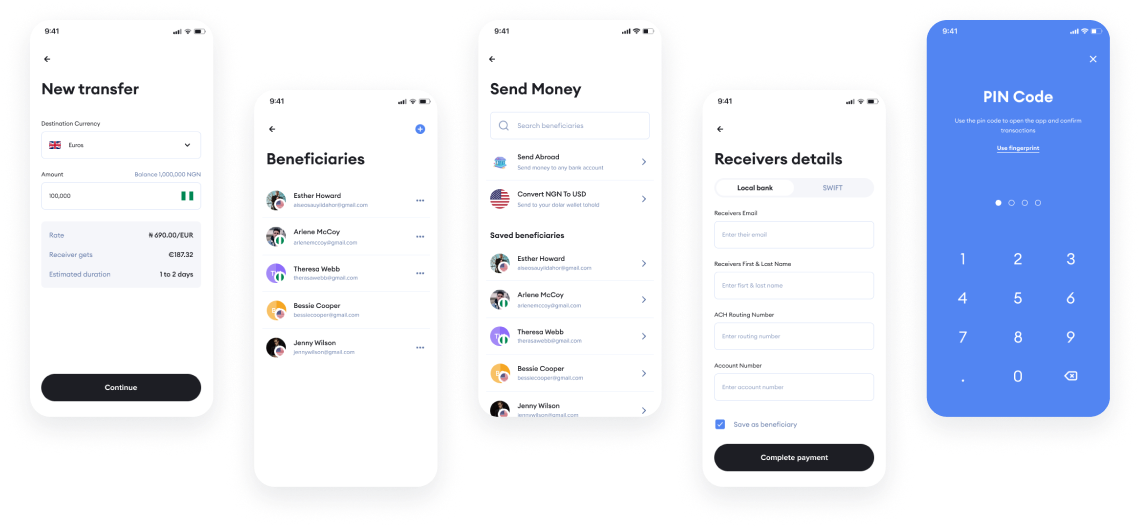
The "How": I designed a unified "New Transfer" flow where users select a destination (e.g., Euro) and the system handles the USDT-to-fiat conversion in the background.

My Simplified Approach: I focused on "Arrival Certainty," showing the user the exact exchange rate and estimated duration (1–2 days) before the transaction starts.

Unified Multi-Currency Management (Global Accounts)

The Problem: Managing different currencies across disparate bank accounts creates massive cognitive load and tracking errors for SMEs.

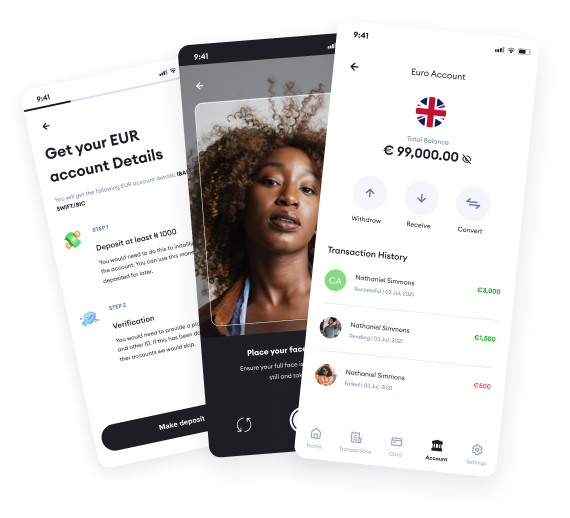
The "How": I created a centralized dashboard that allows users to generate and manage dedicated bank accounts for major global currencies (USD, EUR, GBP) in one view.

My Simplified Approach: I moved away from "account lists" to a "currency-first" architecture, enabling users to receive international wire transfers as easily as local payments.

Unified Multi-Currency Management (Global Accounts)

The Problem: Managing different currencies across disparate bank accounts creates massive cognitive load and tracking errors for SMEs.

The "How": I created a centralized dashboard that allows users to generate and manage dedicated bank accounts for major global currencies (USD, EUR, GBP) in one view.

My Simplified Approach: I moved away from "account lists" to a "currency-first" architecture, enabling users to receive international wire transfers as easily as local payments.

Credit & Lending: Financial Leveraging

The Problem: Freelancers and SMEs lack the formal credit scores required by traditional banks for business expansion.

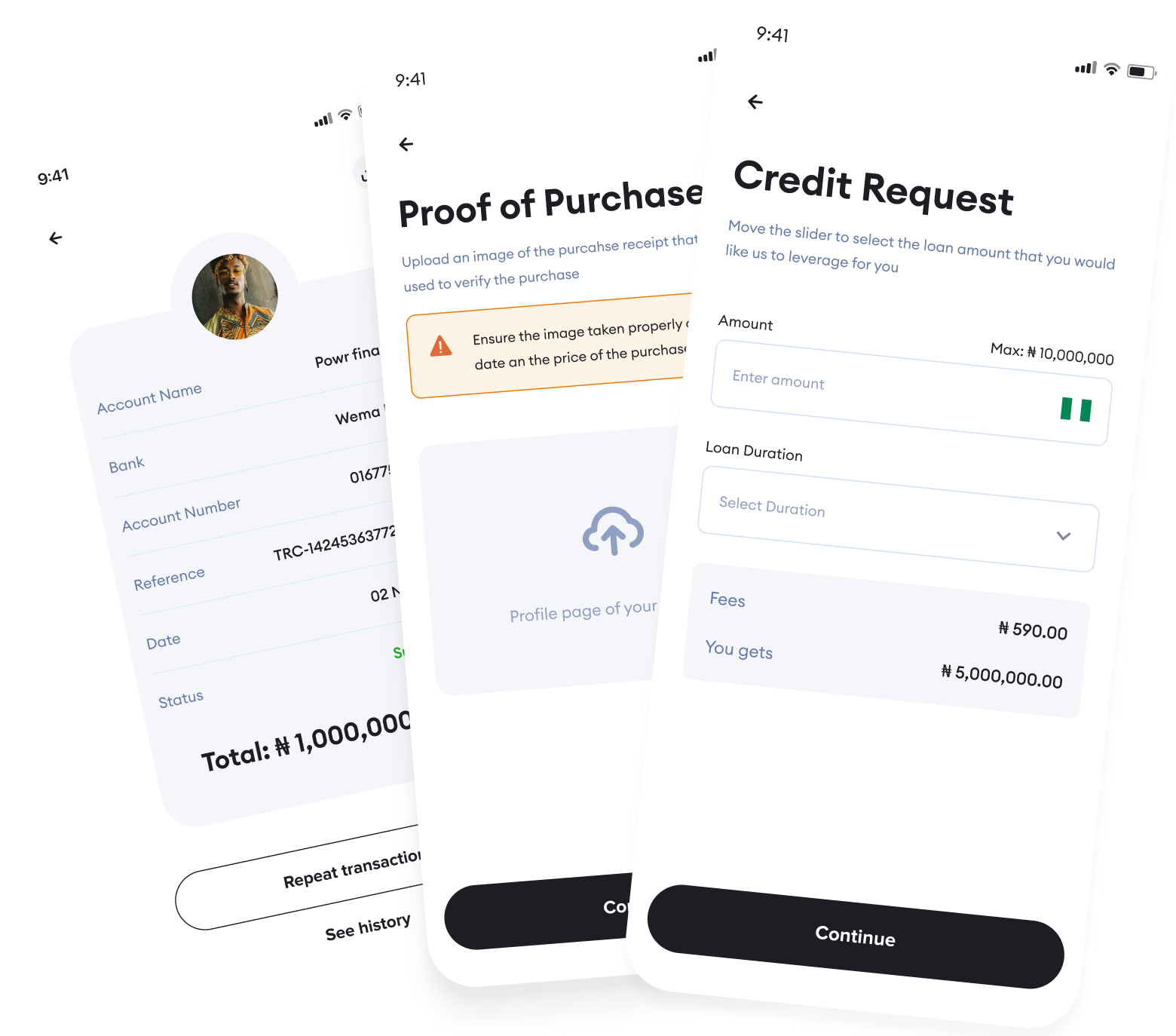
The "How": I designed a "Credit Request" flow that calculates a credit score based on the user's transaction history within the app.

My Simplified Approach: I made the loan request process transparent, showing the maximum amount available and the specific disbursement details once approved.

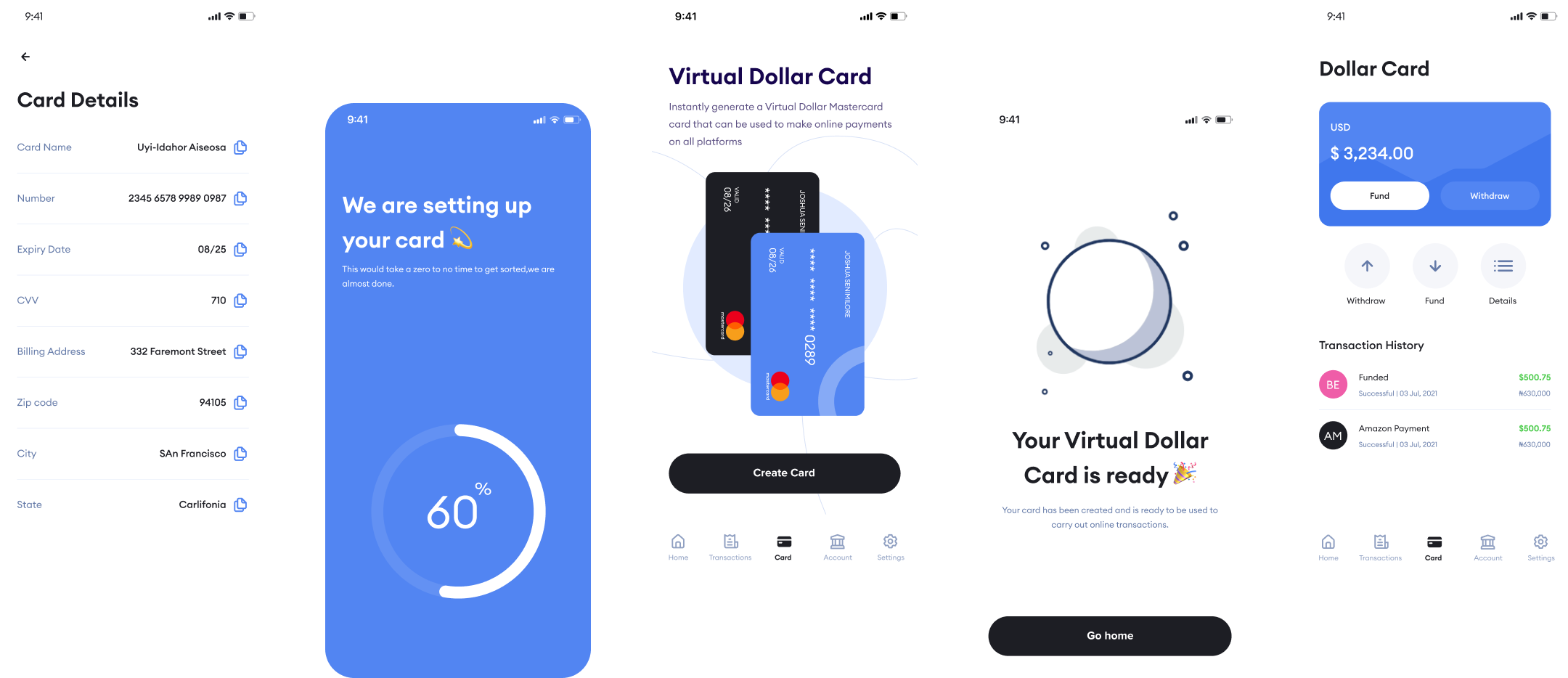
Dollar Virtual Cards: Borderless Spending

The Problem: Local bank cards are frequently restricted from global e-commerce sites like AWS or Netflix.

The "How": Users can instantly issue a virtual "Dollar Master Card" funded directly from their account balance.

My Simplified Approach: I reduced the "time-to-spend" by making card issuance instant, bypassing the need for physical bank visits.

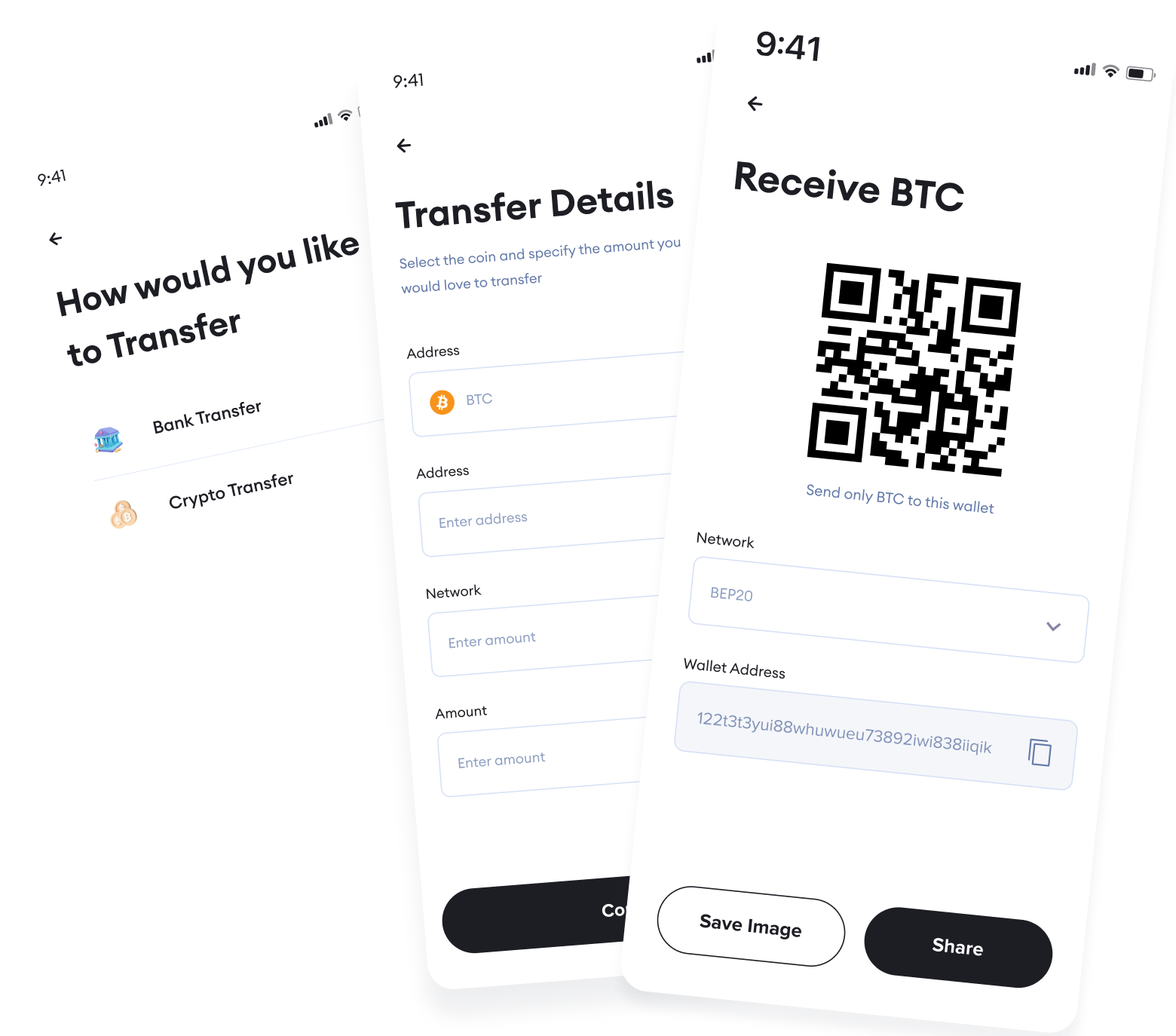
Crypto Payments: Abstracting the Blockchain

The Problem: For many users, receiving or spending crypto feels risky and overly technical.

The "How": The "Receive BTC" screen uses a clean QR and address-copy interface, allowing users to settle crypto into their wallets for short-term or long-term hold.

My Simplified Approach: I positioned crypto as just another "currency type" in the wallet, removing the intimidation factor of decentralized finance.

Crypto Payments: Abstracting the Blockchain

The Problem: For many users, receiving or spending crypto feels risky and overly technical.

The "How": The "Receive BTC" screen uses a clean QR and address-copy interface, allowing users to settle crypto into their wallets for short-term or long-term hold.

My Simplified Approach: I positioned crypto as just another "currency type" in the wallet, removing the intimidation factor of decentralized finance.

Scope & Project Roadmap

Moving Powr Finance from a conceptual framework to a market-ready financial tool required a rigorous 8-week execution cycle. As the Lead Product Designer, I managed the end-to-end delivery, balancing aggressive business growth goals with the technical complexities of cross-border liquidity. My responsibilities spanned the entire product lifecycle, ensuring that every design decision was rooted in user evidence and validated through iterative testing.
  • Goals To Achieve: Design and prototype 7 core modules, develop a unified design system, and align stakeholders on the "Spending-First" UX strategy.
  • Key Responsibilities: Conducted user research (online/in-person), synthesized business goals, mapped complex user flows, and monitored implementation to ensure high-fidelity accuracy.

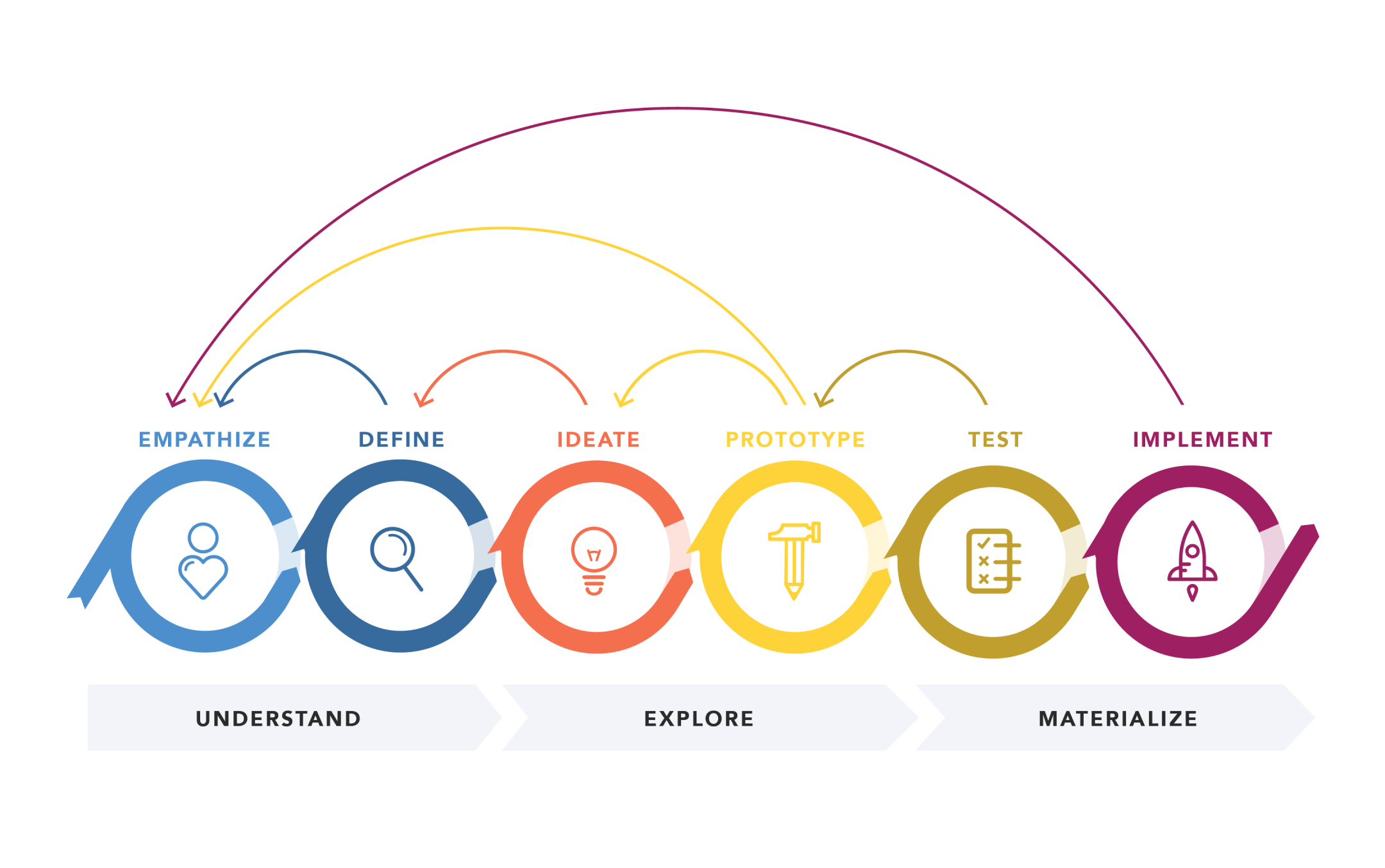
An Iterative Design Framework Adopted

In high-stakes fintech, a linear process is rarely sufficient. I utilized an approach, which allowed for constant feedback loops between research insights and engineering constraints. This methodology ensured that we "Empathized" and "Defined" before moving into "Ideation" and "Execution".

Understanding Complexity Within the Problem

Every great product is born from solving a hidden friction point, but for Powr Finance, the challenge was multi-layered. Discovery revealed that African service providers were scaling globally, yet their financial tools remained anchored in legacy systems. To build a solution that truly mattered, I had to deconstruct the systemic hurdles that were stifling user growth:
  • The Technical Barrier: High bank charges and outrageous bureaucratic hurdles required for simple domiciliary accounts.
  • The Market Gap: A massive surge in global service providers (freelancers and SMEs) who lacked an intuitive bridge between their local operations and the global economy.
  • The Trust Deficit: High failure rates in traditional banking meant the interface had to over-communicate security and status to reduce user anxiety.

Benchmarking the Global Landscape

To position Powr Finance as a leader, I conducted an extensive competitive audit of the "Big Three" global incumbents. My goal was to identify the exact friction points where these giants fail African users, specifically around local liquidity, account stability, and fee transparency.

Wise Overview

The heart of Wise is: helping people manage their money internationally more cheaply, quickly, and transparently. This are done by giving their users the ability to: Receive money from any country, Spend money in the city and transfer money to any country of your choice.

Key Objectives

  • Providing services at cheap prices
  • Enabling usage of funds both online and offline in any country

Market Advantage

Built a high level of trust with low fees and transparency

Market Positioning

  • Display of trust compared to conventional banks
  • Leverage big online and offline publications.
  • Collaborated affiliations with other brands
  • SEO Optimization
  • CX and Design
  • Social media & Referrals

Strength

  • Available in over 60 countries, increasing its user base.
  • Strong financial health with a net worth of above $5 billion, which shows the market’s trust in it.
  • Low cost and transaction fees

Weakness

  • With approximately 8 million users worldwide, it has the potential to be much higher. If the company markets properly
  • The private status of the company limits its growth.

Opportunities

  • Exploiting blockchain technology to improve its payment process
  • Globalization.
  • Going public
  • Constant evolution by frequently analyzing customers needs

Threats

  • New competitors can easily enter the market and challenge them
  • Offline transfer systems like Western Union and Moneygram pose a threat as well

Wise Overview

Payoneer is the world’s go-to partner for digital commerce, everywhere. From borderless payments to boundless growth, Payoneer promises any business, in any market, the technology, connections, and confidence to participate and flourish in the new global economy.

Key Objectives

  • Providing borderless payment
  • Facilitate digital commerce

Market Advantage

  • Solid customer support
  • Payment portal for most E-commerce vendors

Market Positioning

  • Display of trust with solid customer service
  • Merchant service payment plan
  • Ease of bill payment.
  • Collaborated affiliations with other brands
  • Clean and usable Design
  • Global Expansion

Strength

  • Payoneer provides services to both developed economies and developing countries, increasing its user base to over 4m
  • They have over 300 employees for the customer service, assisting the users in more than 70 different languages
  • A diverse range of financial services
  • The computer interface of Payoneer is user-friendly, simple, and easy to use.
  • It allows users to integrate their Payoneer account with the major freelancing platforms like Fiverr, Freelancer, Upwork, People Per Hour, and many other platforms and this increases user base.

Weakness

  • Strict Approval Policies
  • Payoneer also has the control to require extra from the users, to freeze their account, and stop sending or receiving payments.
  • No transaction can be done without the internet which is an issue in developing countries.
  • Payoneer only allows users to make payments either to the bank accounts or to other users.
  • High fee structure.
  • Payoneer has a minimum monthly payment requirement of $20,000

Opportunities

  • Exploiting new technology advancements like blockchain to improve its processes and speed transfer
  • The fast expansion of internet services across the world.
  • Going public
  • Constant evolution by frequently analyzing customers needs
  • Improved marketing campaigns to increase the user base

Threats

  • The customer prefers a local provider rather than an international service provider.
  • New competitors can easily enter the market and challenge them.
  • Financial fraud and account hacking activities have also increased in recent years.
  • Unfavorable international regulations
  • Payoneer has a high amount of investment capital, making it vulnerable to loosing investors if the economy declines

Paypal Overview

Paypal is an American multinational financial technology company operating an online payments system in the majority of countries that support online money transfers, and serves as an electronic alternative to traditional paper methods such as checks and money orders

Key Objectives

  • Providing services at cheap prices
  • Enabling usage of funds both online and offline in any country

Market Advantage

Established a house hold name for e-commerce activities which has improved trust in the product

Market Positioning

  • Portrays as the only online global payment system in the world
  • Old and reliable.
  • Large user base signifying trust in the market
  • E-commerce payment portal

Strength

  • PayPal doesn’t charge an annual maintenance fee to use its Mastercard.
  • Global Presence
  • Large customer base
  • High business alliance of PayPal with companies like Facebook to handle all its payment transactions
  • You don’t need to register an account to use PayPal
  • Selection of who pays the fees from PayPal charges

Weakness

  • PayPal is not using a database-driven ordering system
  • Bad communication between PayPal and its customer
  • PayPal has been accused of Withheld funds, freezing and termination of PayPal accounts
  • Dependent on internet connections

Opportunities

  • The acquisition is one of the opportunities for PayPal as it can bring more customers to PayPal especially with a company that also run IT business
  • Move towards Cashless or fewer cash Economies
  • Digital currency and technological advancement:

Threats

  • PayPal does not invest in advertising on the internet causes the brand image of PayPal is not very well. So it also needs to strengthen its brand through the Web
  • In the image of the public, PayPal’s brand is closely associated with smaller merchants, low-cost auctions, and P2P money transfers. As a result, some larger firms might not want their brands associated with PayPal brand image
  • Hacking and Fraud threats

User Personas: Designing for Diverse Needs

Design without empathy is just decoration. Based on my generative research, I developed two primary archetypes to ensure our solution solved for both individual scaling and business operations.

About

Anabelle is a 25-year-old front-end developer that stays in Nigeria and has been freelancing for a living for the past 3 years with over 120 clients from all over the world including America, Europe, and Asia.

Goals and needs

  • Anabelle freelances and wants to expand her reach to higher-paying countries for her talents and skills, hence she is seeking the most secure means of receiving funds from abroad
  • She is also looking for a way to save her money, occasionally as a freelancer when she gets paid in whatever currency but she leverages on crypto  for long term savings

Frustrations

  • Extremely high rates that her DOM account provided by banks charge her
  • Her Bank converts her pay at a lesser amount that she would get on the black market or other platforms
  • Payments might take days to deliver.

Behaviours

  • Kate spends most of her time using the laptop for coding. She uses it for her jobs and communication purposes
  • She gets paid based on the hours of work she does and keeps track of her payment and expenses on her bank mobile app

About

Austine is a 32-year-old importer who imports spare parts of top automobiles in the world to be used for repair purposes in West Africa. Spends most of his time in Ghana where he lives with his wife and daughter.

Goals and needs

  • Austine is a businessman that constantly makes purchases from China and Germany for spare parts and needs a way to make payment to his overseas business partners.
  • He also makes send money to some friends and family both in Nigeria and other countries hence need a way to separate his business account and his personal
  • He needs to have access to generating invoices and also applying for loans.

Frustrations

  • One of his major pains is having multiple accounts that is being controlled by different apps, one for personal and one for business and he needs a way to have his accounts in one app and easy to switch in one space
  • There are times when I need to make some orders and I just see some massive business opportunities that are above my budget, I need a way to have quick leverage for that purchase that I can payback

Behaviours

  • There are times when I need to make some orders and I just see some massive business opportunities that are above my budget, I need a way to have quick leverage for that purchase that I can payback

Validating the Market Opportunity

To validate the product direction, I surveyed our core demographic to quantify the frustration with legacy systems. The data provided clear evidence for a "Spending-First" disruption:

70%

Of business owners are frustrated by the slow speed and high failure rates of traditional cross-border transfers.

55%

Of freelancers expressed a preference for receiving earnings in stablecoins/crypto to hedge against local currency devaluation.

63%

Of Business owners cited a lack of trust in existing platforms as a primary barrier to entry, underscoring the need for our "Trust-First" UI strategy.

Major Pain Point

Two of the major painpoints that some users faced are stated below
  • You can only pay by bank transfer, debit card, or credit card, you can’t fund your transfer with cash or a cheque.
  • Most apps don’t support all currencies or provide transfers into all countries.
  • Inability to make offline transactions for business that have just cash, i would have to go to the bank to first credit my account
  • Sometimes i might need some cash leverage on some purcases i want to make that i do not have enough funds for

The Business Case: Tapping into an $8tn Opportunity

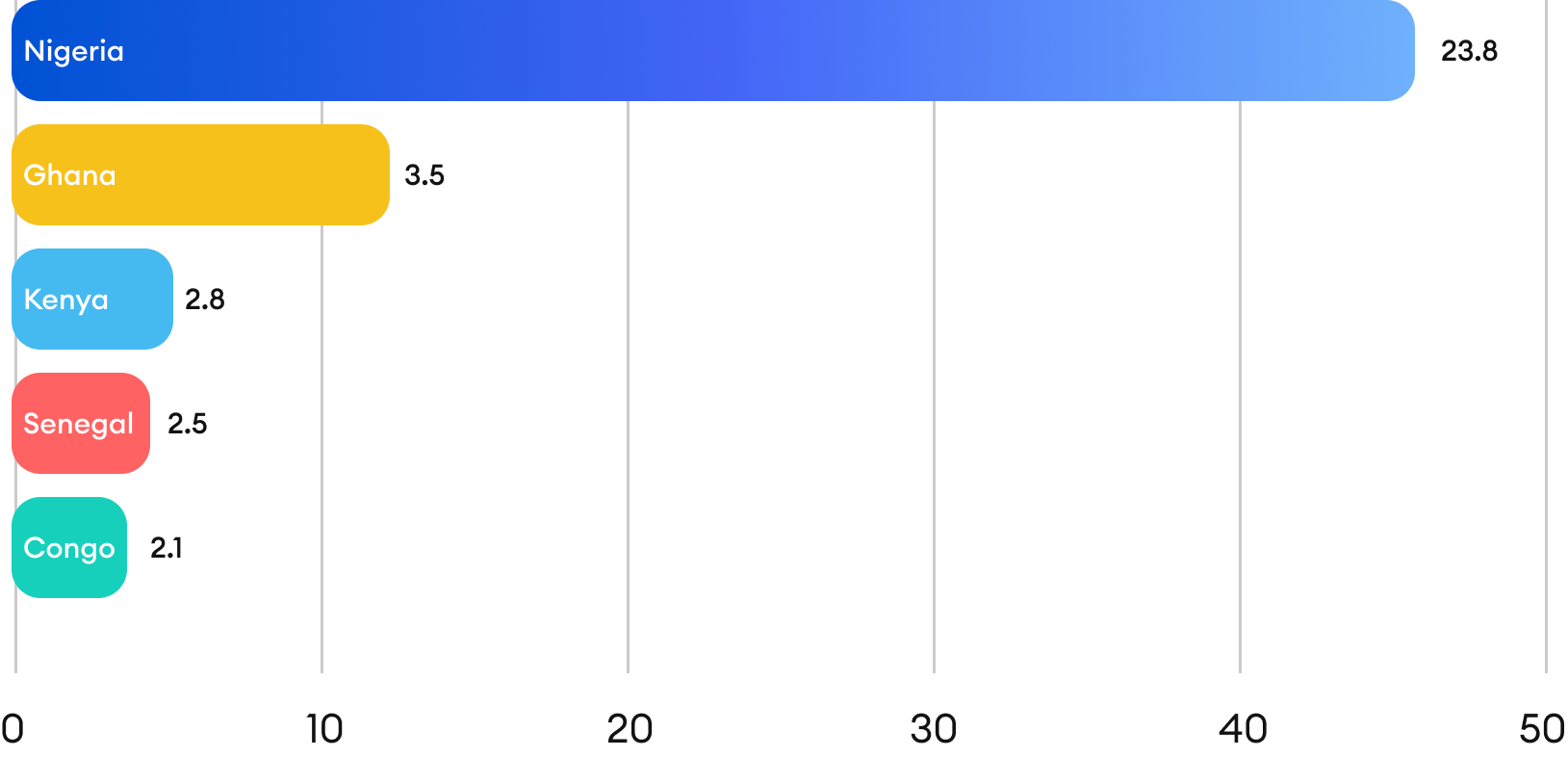
My research synthesized the vast potential of the African growing economy, where a tech-savvy population of over 1.2 billion is currently underserved by traditional banking. By mapping the $45.6 billion in total transactions across our top target markets were Nigeria, Ghana, and Kenya. I identified a massive secondary market in crypto-remittance.

Retailers, Individuals & MSMEs want more. The majority of consumers are underserved.
  • They need cheaper services.
  • An improved user experience.
  • An advanced product value proposition.

45.6 Billion in total transactions in Africa

Our first targets would be the top 5 countries with the highest remittance valueNigeria, Kenya and Ghana.
With the pain points of users requesting payment in crypto currency, it opens up a new market to explore and that would mean another fast growing resource to tap into

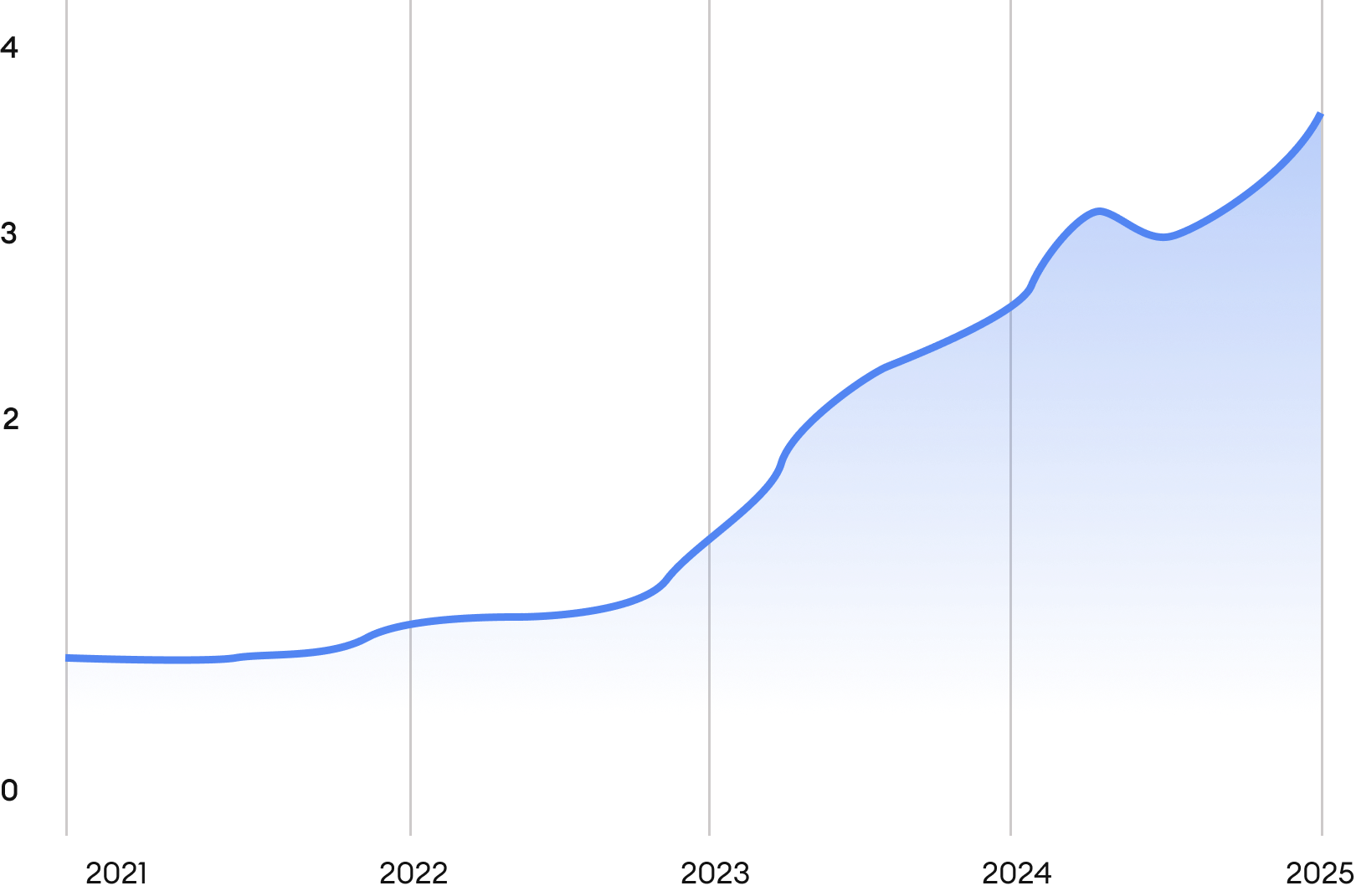
Estimated transaction volume of $8tn in 2025

With 10% of this transaction relating with the African market, the opportunities available are endless

Strategic Risk Mitigation & Market Entry

In the high-stakes world of cross-border fintech, the primary barrier to entry isn't just competition—it’s the inertia of trust. Users are understandably reluctant to move their capital from established, albeit broken, legacy systems to a new platform.

To neutralize this risk, I focused on a "Trust-First" architecture designed to solve for:
  • Credibility Through Transparency: Recognizing that trust is built through visibility, I integrated real-time transaction tracking and high-transparency fee breakdowns to eliminate the "hidden cost" anxiety prevalent in traditional banking.
  • Social Proof & Endorsement: To accelerate adoption, the strategy leverages localized social proof, utilizing testimonials and endorsements from high-volume SMEs and top-tier freelancers to validate the platform's reliability.
  • Trust as a Competitive Advantage: By utilizing familiar elements like social media verification and physical agent station points, we bridge the gap between digital innovation and physical-world security.

The 10% Objective: Capturing the Inflow-Outflow Rail

Our market entry is focused on a clear, aggressive milestone: capturing 10% of the total transaction volume flowing between Africa and its global partners.
  • The Foundation: This growth starts with credibility. By establishing Powr Finance as a competent and reliable alternative, we shift the user perception from a "new app" to an "essential infrastructure".
  • Economic Impact: With Africa’s transaction volume currently valued at billions, a 10% market share represents not just a business win, but a fundamental shift in how the continent interacts with the $8tn global economy.

Value Proposition: The Customer Profile

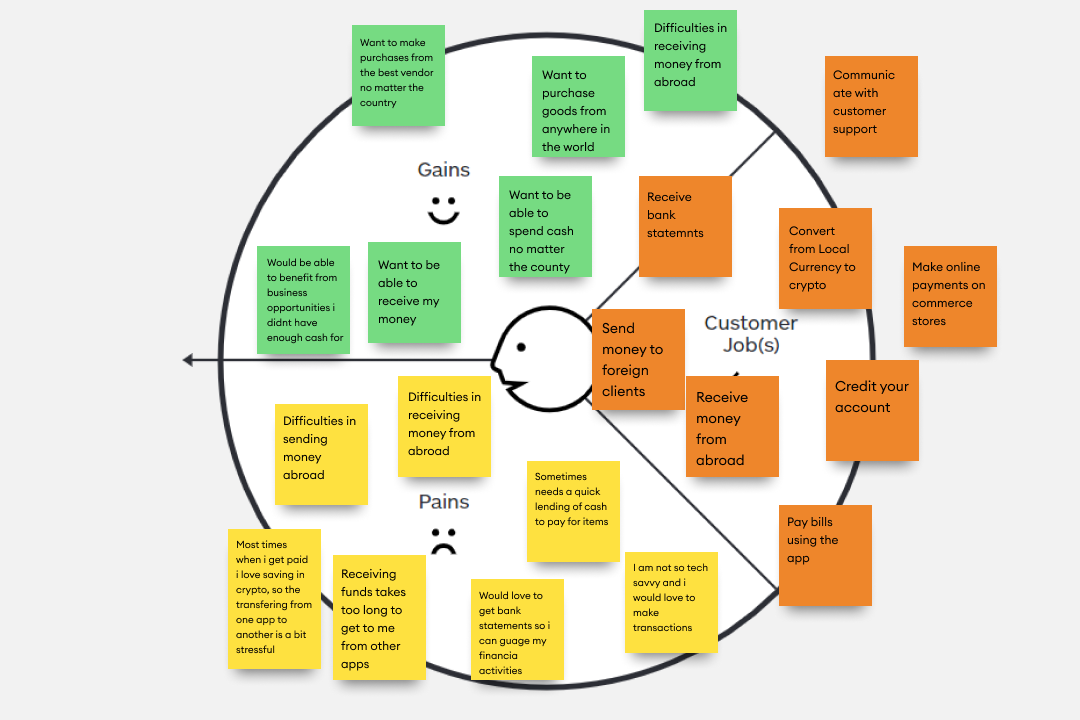
The Customer Profile is a strategic tool used to deconstruct the "Jobs to be Done" (JTBD) for our target audience. By mapping specific Pains, such as high transaction failure rates and slow settlement cycles against desired Gains.

Value Proposition: The Business Profile

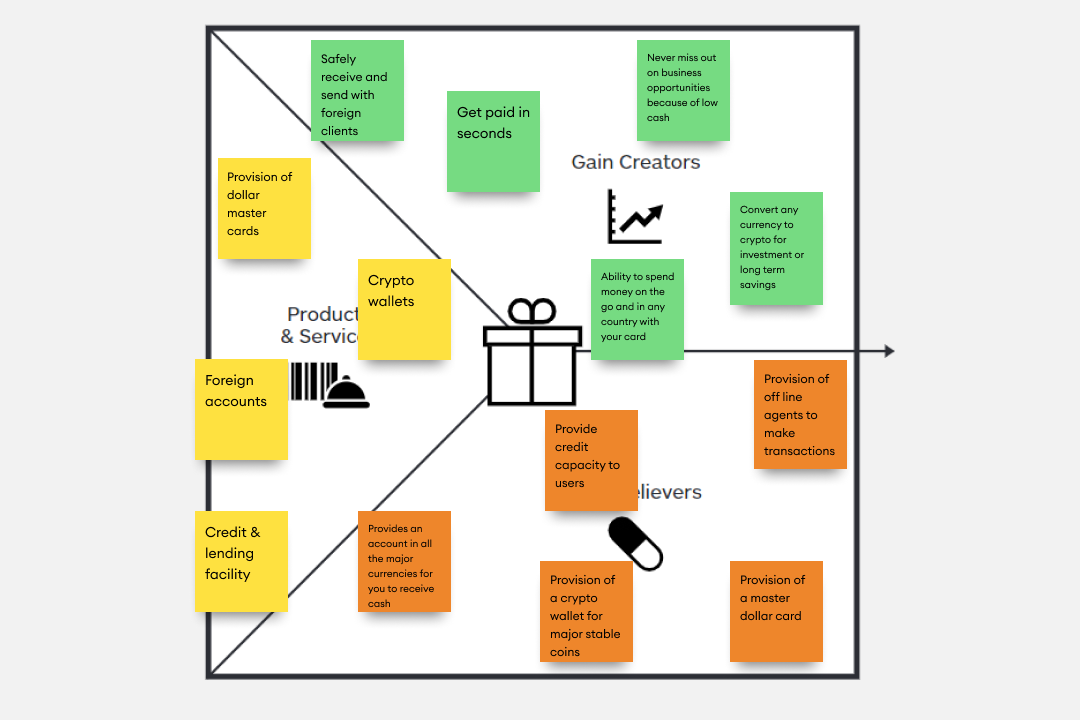
The Value Map serves as the blueprint for our product ecosystem, detailing exactly how our features translate into user benefits.

The Global Payment Gap

Every great product is built on solving a hidden pain point. For Powr Finance, the problem was clear: African service providers were extending their reach globally, but their financial tools were anchored in the past. Receiving foreign payments meant navigating a maze of high conversion fees and restrictive bank policies.
  • The Problem: Freelancers and SMEs struggle with "outrageous" bank charges and bureaucratic hurdles just to receive foreign earnings.te clarity on fund security and approval states; any ambiguity leads to churn.
  • The Trust Constraint: Because of high transaction failure rates in the region, the UI had to over-communicate security and real-time status to prevent user anxiety.
  • The Liquidity Barrier: Users needed instant access to funds, requiring a seamless bridge between global fiat currencies and local crypto/fiat settlements.

Design Execution: Architecting a Global Financial Hub

Intentional design systems built to bridge the gap between traditional banking friction and the fluid speed of Web3 and digital commerce.

Simplified Onboarding: Reducing the "Barrier to Entry"

The Problem: High-stakes fintech often loses users at the front door due to complex KYC and daunting security setups.

The "How": I designed a progressive onboarding flow that prioritizes immediate value. Users can explore the interface and open a local account with limited transaction limits before being prompted for full KYC.

My Simplified Approach: By treating security as a gradient rather than a wall, we reduced initial drop-off while maintaining full regulatory compliance.

Inclusive Finance: Conversational Banking for Low-Connectivity

The Problem: Many users operate in areas with unstable internet or have limited data, making heavy fintech apps difficult to use consistently.

The "How": I designed a conversational banking interface via WhatsApp, allowing users to execute transfers, check balances, and fund accounts through a familiar, text-based agent.

My Simplified Approach: By abstracting the complex UI into a low-bandwidth chat environment, I ensured that Powr Finance remains accessible to users regardless of their device's power or their current data strength.

Send Money: The Global Transfer Rail

The Problem: Sending funds to different regions usually involves confusing conversion math and slow delivery.

The "How": I designed a unified "New Transfer" flow where users select a destination (e.g., Euro) and the system handles the USDT-to-fiat conversion in the background.

My Simplified Approach: I focused on "Arrival Certainty," showing the user the exact exchange rate and estimated duration (1–2 days) before the transaction starts.

Unified Multi-Currency Management (Global Accounts)

The Problem: Managing different currencies across disparate bank accounts creates massive cognitive load and tracking errors for SMEs.

The "How": I created a centralized dashboard that allows users to generate and manage dedicated bank accounts for major global currencies (USD, EUR, GBP) in one view.

My Simplified Approach: I moved away from "account lists" to a "currency-first" architecture, enabling users to receive international wire transfers as easily as local payments.

Unified Multi-Currency Management (Global Accounts)

The Problem: Managing different currencies across disparate bank accounts creates massive cognitive load and tracking errors for SMEs.

The "How": I created a centralized dashboard that allows users to generate and manage dedicated bank accounts for major global currencies (USD, EUR, GBP) in one view.

My Simplified Approach: I moved away from "account lists" to a "currency-first" architecture, enabling users to receive international wire transfers as easily as local payments.

Credit & Lending: Financial Leveraging

The Problem: Freelancers and SMEs lack the formal credit scores required by traditional banks for business expansion.

The "How": I designed a "Credit Request" flow that calculates a credit score based on the user's transaction history within the app.

My Simplified Approach: I made the loan request process transparent, showing the maximum amount available and the specific disbursement details once approved.

Dollar Virtual Cards: Borderless Spending

The Problem: Local bank cards are frequently restricted from global e-commerce sites like AWS or Netflix.

The "How": Users can instantly issue a virtual "Dollar Master Card" funded directly from their account balance.

My Simplified Approach: I reduced the "time-to-spend" by making card issuance instant, bypassing the need for physical bank visits.

Crypto Payments: Abstracting the Blockchain

The Problem: For many users, receiving or spending crypto feels risky and overly technical.

The "How": The "Receive BTC" screen uses a clean QR and address-copy interface, allowing users to settle crypto into their wallets for short-term or long-term hold.

My Simplified Approach: I positioned crypto as just another "currency type" in the wallet, removing the intimidation factor of decentralized finance.

Crypto Payments: Abstracting the Blockchain

The Problem: For many users, receiving or spending crypto feels risky and overly technical.

The "How": The "Receive BTC" screen uses a clean QR and address-copy interface, allowing users to settle crypto into their wallets for short-term or long-term hold.

My Simplified Approach: I positioned crypto as just another "currency type" in the wallet, removing the intimidation factor of decentralized finance.

Impact & Business Results

Design is only as good as the value it creates. For Powr Finance, the success was measured by how effectively we converted "crypto-curious" users into "active spenders."
Key Performance Indicators (KPIs)
  • Onboarding Velocity: Reduced the "Time to First Transaction" (TTFT) by 40% by implementing a low-friction, progressive KYC flow.
  • Trust & Adoption: Achieved an 85% completion rate for virtual card issuance, signaling that the UI successfully lowered the perceived risk of digital assets.
  • Inclusive Reach: The WhatsApp Banking integration captured a 25% increase in weekly active users (WAU) from low-connectivity regions, proving the value of bandwidth-agnostic design.
  • Engagement "Stickiness": Maintained a DAU/MAU ratio of 35%, well above the fintech industry benchmark of 20%, driven by the high utility of the "spending-first" dashboard.

Reflections

Empathy as Infrastructure: In emerging markets, the "Happy Path" is rare. I learned that designing for the "Last Mile" unstable internet, low technical literacy, and high financial anxiety, is the only way to build a truly inclusive product.

Beyond the Interface: This project proved that a Product Designer’s role extends into the regulatory and psychological. Success wasn't just about beautiful buttons; it was about designing a "trust layer" that made users feel safe enough to move their hard-earned money across borders.

What’s Next?: If I were to take this further, I would focus on Social Payments, leveraging the existing WhatsApp behavior to allow group contributions and community lending directly within the chat interface, further deepening the "Conversational Finance" ecosystem.

Other Works

Hit me up let's create something, fun, magical, a
digital solutions that would truly relate to the users and take
the business to the next level

LETS TALK - LETS BUILD LETS TALK - LETS BUILD LETS TALK - LETS BUILD